
"tamper storage"
300 article(s) found

The planting history of Java coffee beans? What's the coffee story? How to cook Java coffee beans
Professional coffee knowledge exchange more coffee bean information please follow the coffee workshop (Wechat official account cafe_style) Java coffee bean planting history? What's the coffee story? How to cook Java coffee beans? Java coffee was brought to Indonesia by the Dutch in about 1696 and has been cultivated for more than 300 years. West Java province is a first-tier administrative district of Indonesia.

The origin and development of Indonesian West Java coffee beans
Except for W.I.B., which is larger, the rest are smaller. The biggest difference lies in the processing after harvest, so there are some differences in appearance, aroma and taste. Java produces only a small amount of Arabica beans, while most of them are Romstar beans imported from Africa after rust disaster. This roasted coffee has a strong bitter taste but an extremely light aroma, although it has a low acidity and a good taste.

Introduction of Indonesian Java Coffee with mild Flavor Flavor and Fine Coffee production area
Located between the vast Indian Ocean and the Pacific Ocean, Indonesia is a country of 18108 islands, of which Java is the fourth largest. Java, which is surrounded by the sea, has a tropical rain forest climate. There is no change of cold and summer seasons. The annual average temperature is 25 degrees Celsius and the rainfall is abundant. The unique natural conditions make the tropical plants on the island

Introduction to the boutique coffee estate with a very unique taste of Ugandan coffee
The people of all parts of Uganda resisted the British aggression tenaciously. In 1893, Britain sent troops to occupy the Kingdom of Bunioro, and King Kabarega led some of the people to wage guerrilla warfare for six years. In 1897, King Mwaanga of Buganda raised his army against Britain and later joined Kabarega in the Rango region. In April 1899, the two kings were captured and the uprising failed. To make it easier to rule

Uganda Coffee Flavor Taste Manor Production Features Boutique Coffee Bean Introduction
In the late 1920s, Britain carried out constitutional reforms aimed at autonomy in Uganda. At the end of 1931, three major political parties were formed in Uganda: Uganda People's Congress, Democratic Party and Kabakayaka Party. In March 1931, Uganda held its first general election, which was won by the Democratic Party and Benedik Tokiwanuka was appointed Chief Minister. March 1932 Uganda becomes self-governing and Kiwanuka is in charge.

Introduction to the planting environment of Ugandan boutique coffee beans with delicate taste
According to the 1942 Constitution, Uganda adopted a federal system after its independence, and the kingdoms of Buganda, Bunioro, Toro and Ancole, as well as the Busoga Special District, were all members of the Federation. The people's Congress Party and the Kabakayeka Party form a coalition government, with Milton Obote, chairman of the people's Congress Party, as prime minister, and King Mutsa II of Buganda as president. The bipartisan alliance broke down in 1964

Rich aroma of Java coffee flavor taste manor characteristics of boutique coffee beans
Although there was not much result in the march of the Yuan Dynasty into Java, it made Java afraid of the armies of the Yuan Dynasty. Coupled with the fact that a large number of southerners of the Yuan Dynasty of China went south to Southeast Asia to carry out ocean trade, the Southern Navy of the Yuan Dynasty of China often patrolled Borneo (Kalimantan Island) in the South China Sea. Java took the initiative to send tribute to the Yuan Dynasty of China, Java was a vassal state of China, and there were close official and people exchanges between the two countries.

A brief introduction to the planting market price of nutty boutique coffee beans in West Java, Indonesia
Java: coffee bean species Robusta Sumatra (Sumatra): coffee bean species Arabica Java coffee (java Java coffee) the history of Java coffee beans (coffee powder) belongs to: Robasda (Robusta) variety, mainly distributed in African countries such as C ô te d'Ivoire, Angola, Madagascar and the Philippines, Vietnam and Indonesia (Java) and other places. Claw

A brief introduction to the planting Market Price of Fine Coffee Bean varieties in West Java, Indonesia
Java: coffee bean species Robusta Sumatra (Sumatra): coffee bean species Arabica Java coffee (java Java coffee) the history of Java coffee beans (coffee powder) belongs to: Robasda (Robusta) variety, mainly distributed in African countries such as C ô te d'Ivoire, Angola, Madagascar and the Philippines, Vietnam and Indonesia (Java) and other places. Claw

The flavor and taste of Ugandan coffee with extremely light aroma introduction to the characteristics of boutique coffee in manor area
The people of all parts of Uganda resisted the British aggression tenaciously. In 1893, Britain sent troops to occupy the Kingdom of Bunioro, and King Kabarega led some of the people to wage guerrilla warfare for six years. In 1897, King Mwaanga of Buganda raised his army against Britain and later joined Kabarega in the Rango region. In April 1899, the two kings were captured and the uprising failed. To make it easier to rule

A brief introduction to the planting of fine coffee beans in West Java, Indonesia, geographical location, climate and altitude
Java: coffee bean species Robusta Sumatra (Sumatra): coffee bean species Arabica Java coffee (java Java coffee) the history of Java coffee beans (coffee powder) belongs to: Robasda (Robusta) variety, mainly distributed in African countries such as C ô te d'Ivoire, Angola, Madagascar and the Philippines, Vietnam and Indonesia (Java) and other places. Claw

A brief introduction to the flavor, taste and aroma characteristics of nutty West Java coffee beans in Indonesia.
Java Coffee-Culture Java coffee beans are famous for their early Java coffee, which refers to Arabica coffee formerly produced on the island of Java. It has a strong aroma, low acidity, taste lubrication, combined with mocha coffee, the Java mocha mixed coffee has been popular and has become synonymous with top coffee. At that time, it was sold to Europe.

A brief introduction to the treatment method of grinding and baking degree of Indonesian West Java boutique coffee beans with low acidity
In the 18th century, Indonesia became a major producer of coffee, and almost all of its high-quality Arabica coffee was supplied to Europe. But by the 19th century, coffee rust, which appeared in Ceylon in 1869, also affected Indonesia. By 1877, most of the coffee fields on the Indonesian islands had been damaged by rust, and the Dutch had to introduce other coffee varieties from Africa, namely Romsda.

A brief introduction to the description of flavor and aroma characteristics of boutique coffee beans in West Java, Indonesia
Java Coffee-Culture Java coffee beans are famous for their early Java coffee, which refers to Arabica coffee formerly produced on the island of Java. It has a strong aroma, low acidity, taste lubrication, combined with mocha coffee, the Java mocha mixed coffee has been popular and has become synonymous with top coffee. At that time, it was sold to Europe.

A brief introduction to the cultivation of boutique coffee beans in West Java, Indonesia, geographical location, climate and altitude
At present, 90% of the coffee beans exported from Indonesia are Robusta beans, and only 10% are Arabica. Before 1920, due to a major environmental disaster, Indonesian coffee varieties were replaced with Robusta beans, so Mandarin coffee in Sumatra is a rare Arabica bean, a treasure before it was discovered in the Blue Mountains. The output of such authentic products is also very small.

A brief introduction to the market price of boutique coffee beans with low acidity in West Java, Indonesia
Java coffee growing environment and main producing area Robusta belongs to lowland cultivation, which is resistant to high temperature, drought, rain, insect pests and strong adaptability. it can grow very well on flat land, and the harvest does not necessarily need manual work, but can be carried out completely by vibration machine. There are two kinds of Robusta coffee that we often come into contact with: A.P.Robusta and W.I.B.Robu.

A brief introduction to the flavor, taste and aroma characteristics of boutique coffee beans in West Java, Indonesia.
Java produces only a small amount of Arabica beans, most of which were imported from Africa after the rust disaster. This kind of coffee has a strong bitter taste after roasting, but the aroma is extremely light. Although it has low acidity and delicate taste, it is rarely used for direct drinking. It is often used to mix mixed coffee, or to make instant coffee. Java coffee is produced in Java, Indonesia, and belongs to Elaraby.

A brief introduction to the flavor, taste and aroma characteristics of boutique coffee beans in West Java, Indonesia.
Java produces only a small amount of Arabica beans, most of which were imported from Africa after the rust disaster. This kind of coffee has a strong bitter taste after roasting, but the aroma is extremely light. Although it has low acidity and delicate taste, it is rarely used for direct drinking. It is often used to mix mixed coffee, or to make instant coffee. Java coffee is produced in Java, Indonesia, and belongs to Elaraby.
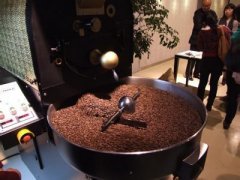
A brief introduction to the Origin, Development, History and Culture of Fine Coffee beans in West Java, Indonesia
Java produces only a small amount of Arabica beans, most of which were imported from Africa after the rust disaster. This kind of coffee has a strong bitter taste after roasting, but the aroma is extremely light. Although it has low acidity and delicate taste, it is rarely used for direct drinking. It is often used to mix mixed coffee, or to make instant coffee. Java coffee is produced in Java, Indonesia, and belongs to Elaraby.